
Offender Locator
Offender Locator Inc.Lifestyle
4.3648.00 Reviews
- Version
- 13.0.5
- Installs
- 100.00K
- Age Rating
- Everyone
Screenshots
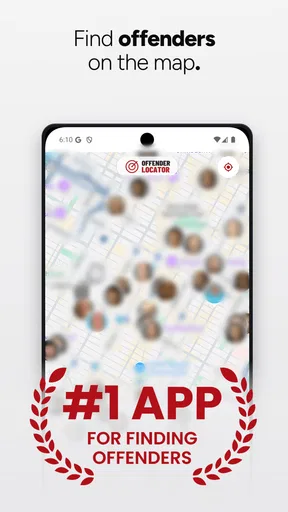
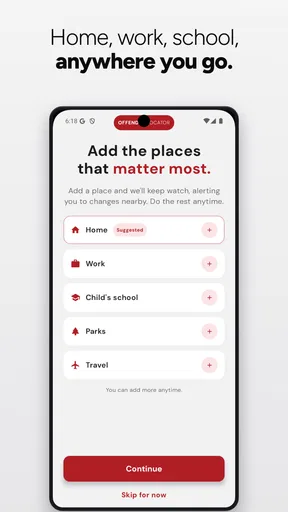
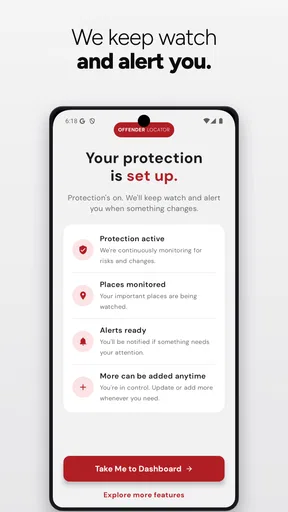
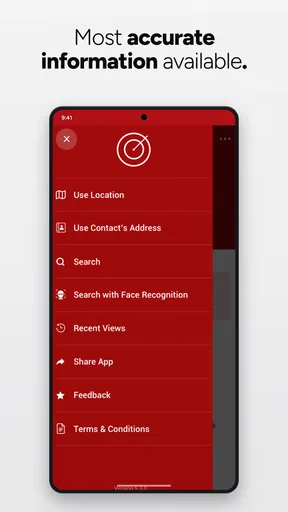
Our Review of Offender Locator
 Analysis by Appyee
I approached Offender Locator as a practical safety-reference app rather than something to browse casually. Its purpose is straightforward: it helps you look for registered sex offenders in your current area or in a location you choose. That can be useful when you are moving, checking a neighborhood before signing a lease, planning a route for children, or simply trying to understand the public information connected with a place. My overall view is mixed: the idea is relevant and easy to understand, but the low average rating of 2.3 from around 410 ratings suggests that the experience has not worked well for many people.
That tension defines the app. Offender Locator, developed by Offender Locator Inc., is free to install and belongs to the lifestyle category, so there is no upfront payment barrier for someone who wants to inspect its basic purpose. However, optional purchases range from $19.99 to $49.99 per item, which makes it especially important to decide whether the information and workflow suit your needs before spending anything. I would treat it as one possible starting point for research, not as a complete safety system or a substitute for official local resources.
What the app does well, and where the experience becomes uncertain
I look at this section through a practical lens: a location search is most useful when it helps me decide what to verify next, not when I treat a result as a verdict. I’ll weigh the app’s focused lookup against the uncertainty that comes with interpreting records and locations, so you can judge whether it belongs in your own research routine.
A focused way to check a place
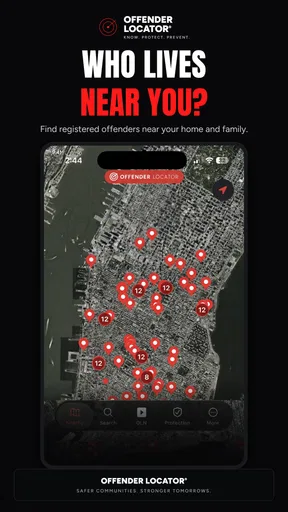
The clearest strength is the app’s narrow focus. Instead of asking you to search broadly across the web, it is designed around a simple question: who is listed in or around a particular area? You can look at your present location or choose another one, which matters because safety research often happens before you arrive somewhere. A person comparing apartments, visiting relatives, arranging childcare, or preparing for a move can investigate a destination rather than only the place where they are standing.
That location choice also makes the app more useful for planning than for spontaneous curiosity. I would use it before visiting an unfamiliar neighborhood, then compare what I find with local public information and practical observations such as lighting, transport, schools, and community facilities. The app can bring one specific concern into view, but it cannot describe the whole character of an area. A map or location result should inform a conversation, not end it.
One useful habit is to search the exact destination and then repeat the check after changing the search area slightly. A result can look different depending on how narrowly or broadly a location is examined. This is not a reason to become alarmed by every name that appears; it is a reason to avoid treating a single search as a complete picture. I found that the most responsible use is comparative: check the address, check the surrounding area, and then verify important details through appropriate official channels.
Helpful for preparation, not personal investigation
The app’s strongest practical role is preparation. Imagine a parent considering an after-school activity in a different part of town. Before enrolling a child, the parent could inspect the area, note any records shown, and decide what additional questions to ask the organization or local authorities. Likewise, someone moving into a new home could use the location search as one step in a wider checklist that includes transport, emergency services, property conditions, and neighborhood access.
That workflow is more valuable than repeatedly opening the app without a clear question. I recommend writing down the address or area you are checking, recording the date of your search, and saving only information that can be responsibly verified later. Public records can change, addresses can be misunderstood, and similar names can create confusion. Keeping a simple note of what you actually searched helps prevent memory from turning a preliminary result into an assumed fact.
Another non-obvious point is emotional discipline. An app like this can make a map or location feel more threatening than it really is because a single entry is visually prominent. I would avoid using it late at night while anxious, or showing results to children as if they were a warning game. The useful output is a prompt for sensible follow-up, not a reason to confront anyone, post names online, or make accusations.
The main weakness is trust and context
The biggest limitation is not the basic idea; it is the amount of context a location-based result may leave you needing. Seeing a registered person connected with an area does not automatically explain the current status, the precise circumstances, the reliability of the address, or what practical action a resident should take. Without careful interpretation, a user can mistake a public record for a complete risk assessment.
This is where I would be cautious. The app should not be used to identify, approach, threaten, photograph, or publicly shame anyone. Even when information is publicly accessible, responsible use still matters. If a result affects a housing, childcare, or personal-safety decision, I would verify it with the relevant official source and ask a qualified local authority about what the record means. The app is better at directing attention than at answering every important question.
The rating also gives me pause. A 2.3 average is not proof that every installation will be frustrating, but it is a clear signal to keep expectations modest. Problems may come from presentation, search behavior, data interpretation, or purchase friction, and the rating alone cannot tell us which issue affected each reviewer. Still, I would not recommend paying for expanded access immediately. First, test whether the available search experience is understandable and useful for your particular location.
The optional pricing deserves careful thought as well. A charge of $19.99 to $49.99 for an individual purchase is substantial for an app that many people may open only occasionally. Before buying, I would make sure the purchase corresponds to a concrete need rather than general curiosity. If you are checking one possible home once, an expensive add-on may not offer enough value. If you have a repeated research need, you should still compare the cost and depth of information with official alternatives before committing.
How it compares with ordinary alternatives
The usual alternative is to search government or law-enforcement websites directly. Those sources can be slower or less convenient, but they are often the better place to confirm a record, understand local terminology, and learn what information is current. Offender Locator can be more approachable for an initial location-based check, while an official source is the stronger choice when a decision carries serious consequences.
General web search is another alternative, but it can produce scattered pages, outdated references, and sensational coverage. The app’s location-centered purpose is more focused than typing a neighborhood name into a search engine. On the other hand, a general search may provide local instructions, reporting contacts, and background that a compact app result does not. I would use the app to organize the first question and broader sources to answer the follow-up questions.
Maps and neighborhood apps also serve a different purpose. They can help with transport, lighting, businesses, schools, and the feel of a place, but they are not designed for this particular type of public-record lookup. Combining them is more sensible than expecting one tool to cover everything. The trade-off is time: responsible research takes several checks, and no location app can remove that responsibility without creating a false sense of certainty.
Who should use it, and who should skip it?
I think Offender Locator is most suitable for adults who want a quick first look at a current or potential location and who are willing to verify anything important. It may be useful for someone relocating, a parent reviewing an activity area, a renter comparing neighborhoods, or a traveler preparing for a longer stay. The ability to choose a location beyond where you currently are is particularly relevant for those planning ahead.
I would skip it if you want guaranteed real-time accuracy, detailed legal explanations, or a complete picture of neighborhood safety. I would also avoid it if you are likely to interpret every result as proof of immediate danger. People who need formal confirmation should go directly to the appropriate official source. People who are already distressed may be better served by speaking with a trusted professional or local authority instead of repeatedly refreshing a location search.
The age rating is Everyone, but that does not mean every use is suitable for every child. The subject matter is serious, and an adult should decide whether a young person needs to see any result at all. In a family setting, I would explain that public records require context and that nobody should be contacted or judged based solely on an app display.
Practical advice before installing or paying
The app was released on October 26, 2017, and its current version is 13.0.1, with Android 8.0 or later required. Those details make it accessible to many older devices, although compatibility alone does not tell you whether the interface will feel smooth on your phone. I would install it only when I have a defined location and a clear reason for checking it, rather than treating it as an app that needs constant attention.
Because it is free to install but includes in-app purchases, I would use a cautious sequence: search the intended area, read the result carefully, decide what question remains unanswered, and only then consider whether a paid item could reasonably address that question. Do not purchase simply because a result feels incomplete; incompleteness may reflect the limits of the underlying public information rather than something an upgrade can solve.
My other practical tip is to separate three ideas: a record, a location, and a personal threat. They are not interchangeable. A location result may tell you that information is associated with an area, but it does not by itself establish that a person is watching a particular home or poses an immediate danger. Keeping those distinctions clear is the best protection against misuse and unnecessary panic.
Making a search useful in an everyday decision
For a realistic example, imagine I am deciding whether to rent a home near a school and a bus stop. I would first use the app to check the address I am actually considering, then repeat the search around the routes and places my household would use regularly. I would not treat a result as a reason to reject the home automatically. Instead, I would list what needs checking, consult the appropriate public source, and visit the area at the times I expect to travel there.
This process helps separate a general concern from a practical question. If the issue is a child’s walk home, the route, visibility, crossings, and who can accompany them may matter more to the decision than a broad neighborhood search. If I am comparing two homes, I would keep the checks consistent: same kind of location, similar surrounding area, and the same standard for verifying anything significant. That prevents a quick search from giving one address an unfairly alarming level of scrutiny.
Another useful trade-off is whether to search from a current location or enter a destination. A current-location check may be convenient when you are already nearby, but a chosen-location search is better for planning and avoids making an unplanned visit just to investigate. If you are away from home, write down the exact address before searching rather than relying on a vague neighborhood label. That small step makes later verification more straightforward and reduces the chance of confusing one place with another.
What to do when a result raises questions
A result that appears relevant should lead to a calm verification step, not an immediate conclusion. I would compare the location and identifying details only through suitable public or official channels, and I would stop if I could not confidently establish that I was looking at the right record. Similar names and imprecise location assumptions are easy ways to draw the wrong conclusion. If the decision is consequential, ask a local authority what the information means instead of trying to interpret legal details from a brief display.
It is also worth deciding in advance what kind of information would actually change your plan. For a rental, that might mean asking a property manager about neighborhood resources or considering another route to nearby services; it should not mean contacting or confronting a person shown in a search. For a family activity, you can ask the organization about its supervision and safety arrangements without repeating an unverified name. This keeps the app’s role narrow and protects everyone involved from speculation.
If you are wondering whether the app replaces a background check or a formal safety assessment, I would not use it that way. It is a location-oriented starting point, whereas a formal process has its own purpose and standards. Nor would I assume that paying necessarily resolves uncertainty: an additional purchase cannot make a record self-explanatory or turn a partial view into a complete account of risk. The best next step depends on the question, and sometimes that step is an official source rather than another app search.
My final view
Offender Locator has a legitimate, understandable use: it gives people a focused way to investigate registered sex-offender information connected with a chosen location. I appreciate that it can support planning before a move or visit, and its free entry point makes an initial check easy. For a careful adult who treats it as one research step, it may be worthwhile.
Still, I cannot recommend it without reservations. The 2.3 average, the potentially high individual purchase cost, and the need for substantial interpretation keep it from being a dependable all-in-one safety solution. Its results should be verified, its limitations should remain in view, and its information should never be used for confrontation or public accusation.
My recommendation is therefore specific: try it only for a defined location-based question, use it alongside official sources, and do not pay until you understand what practical value the purchase would add. If you want a quick starting point, it may help. If you need authoritative, detailed, and legally contextual information, go straight to the relevant local authority instead. Use it as a prompt for responsible research, not as a final verdict on a neighborhood or a person.
Privacy and Permissions
See what permissions an app requests and how it handles your data.
- Contacts
- read your contacts
- Location
- approximate location (network-based), precise location (GPS and network-based)
- Other
- view network connections, full network access, run at startup, control vibration, prevent device from sleeping
Verdict
Strengths of Offender Locator
- Helps users check registered offender information by location.
- Search results can support personal safety planning and awareness.
- Useful for families evaluating nearby areas and addresses.
- Location-based searches make relevant records easier to find.
- Simple concept that requires little technical knowledge to use.
Limitations of Offender Locator
- Coverage and data accuracy may vary by state or local authority.
- Some records may be outdated, incomplete, or missing from searches.
- Search results can be stressful or easy to misinterpret without context.
- Location access may raise privacy concerns for some users.
- Not a substitute for contacting law enforcement in an emergency.
Similar Picks in This Category
View All
SmartThings
Samsung Electronics Co., Ltd.4.6

Google Home
Google LLC4.0

Pinterest4.2

Astrotalk - Talk to Astrologer
Astrology & Horoscope4.7

My Verizon
Verizon Consumer Group4.5

Samsung Wallet (Samsung Pay)
Samsung Electronics Co., Ltd.4.1
Frequently Asked Questions
What is Offender Locator, and what information does it provide?
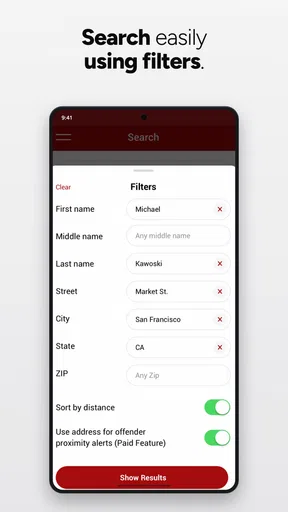
Offender Locator is designed to help users find publicly available offender and sex-offender registry information, depending on the location and databases supported by the app. After entering a name, address, or other available details, users may be able to review records, photographs, offense information, and registration details. The amount and accuracy of information can vary by jurisdiction.
Is Offender Locator available everywhere, and does it cover all offenders?
Coverage depends on the country, state, county, or local authority connected to the application. Some areas may provide extensive registry data, while others may offer limited records or no supported database at all. The app should not be considered a complete list of every offender, because reporting requirements, publication rules, database updates, and legal restrictions differ between jurisdictions.
How accurate and up to date is the information in Offender Locator?
Offender Locator generally displays information obtained from public records, but the app itself may not control how quickly those records are corrected or updated. Addresses, status details, photographs, and other data can change or contain errors. Before making any important decision, users should verify information through the relevant official law-enforcement or government website rather than relying exclusively on the application.
Does Offender Locator use my location or collect personal information?
Depending on the version and enabled features, Offender Locator may request location access to show nearby registry records or search results. It may also process search terms, device information, or usage data according to its privacy policy. Before downloading, review the requested permissions and privacy documentation. Avoid entering unnecessary personal information, and disable location access if nearby searches are not needed.
Can I use Offender Locator to confront or monitor someone?
No. Offender Locator should be used only for lawful, responsible access to public safety information. Registry data is not proof that a person is currently dangerous, and it should never be used to threaten, harass, discriminate against, or confront anyone. Users should follow local laws and the app’s terms of service, particularly when using information for housing, employment, childcare, or other sensitive decisions.
